

For a country sitting on the world’s largest proven crude oil reserves, Venezuela has spent years confronting a painful contradiction: enormous natural wealth, but an economy that has struggled to translate that wealth into a better daily life.
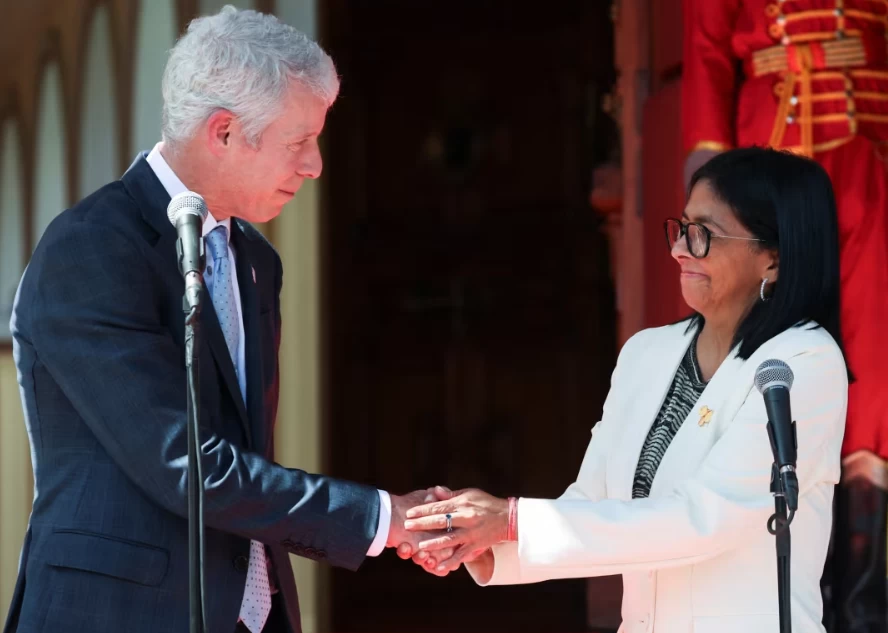
Now, Washington and Caracas are betting that oil can change that equation.
A new agreement involving US energy interests and Venezuela’s government promises major investment in oil production, with officials suggesting that as much as $100 billion could eventually flow into the country. International energy companies are also pursuing additional projects.
The scale of the promises is generating optimism in a country that has endured years of economic instability.
But there is a catch: investment can arrive long before prosperity does.
Venezuela first needs to rebuild oil fields, electricity infrastructure and the broader industrial network required to support higher production. That means the biggest economic gains may take years to materialize — and even then, stronger GDP numbers may not automatically translate into reliable electricity, better water service or higher household incomes.
For ordinary Venezuelans, the question is therefore becoming less about whether billions of dollars are coming.
It is about when they will actually feel the difference.
A huge oil bet with equally large questions
The US agreement with Venezuelan company North American Blue Energy Partners calls for the development of 17 oil fields with an estimated potential of about 65 billion barrels of crude.
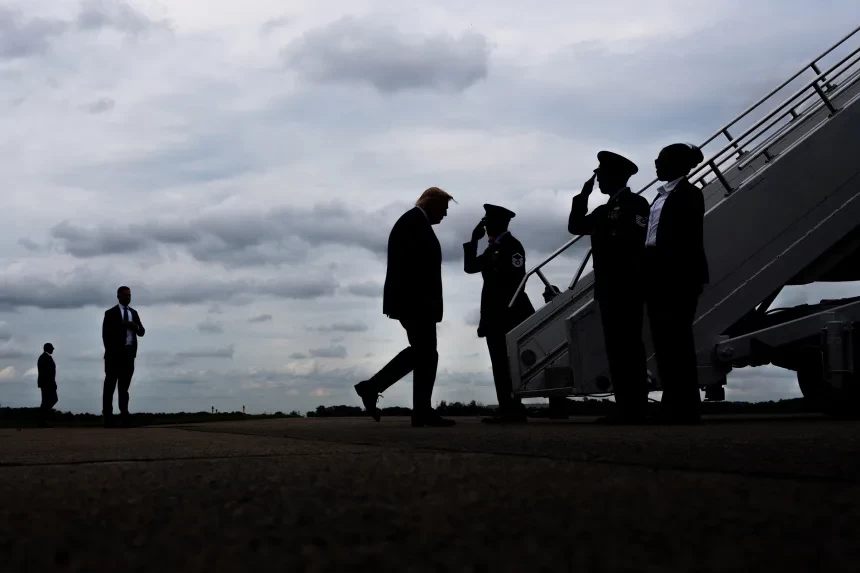
President Donald Trump has described the deal as historic and said the United States would be able to purchase 20% of the resulting production at cost.
Other international companies have separately announced energy agreements, adding to expectations that Venezuela could see a significant return of foreign capital.
For a country whose oil industry has been starved of investment and infrastructure, that could represent a major turning point.
But analysts caution against treating the headline investment figures as money that will suddenly appear in Venezuela.
Economist Manuel Sutherland, director of the Center for Workers’ Research and Education, warned that an influx of capital could even create new economic problems if Venezuela fails to reform the institutions responsible for managing it.
Without changes to monetary policy, exchange-rate rules and economic institutions, he said, new money could simply be diluted through devaluation and the creation of unbacked currency.
In other words, more dollars entering the country does not guarantee that Venezuelans will become richer.
The infrastructure problem hiding underneath the oil deal
Perhaps the biggest obstacle is that some of the oil fields covered by the new investment plans have yet to be developed.
That requires far more than drilling wells.
Luis Vicente León, president of Venezuelan consulting firm Datanálisis, said the projects would require electricity infrastructure that currently does not exist, along with technology, capital and a large workforce capable of supporting new industrial clusters.
Developing the fields could take five to 10 years, he said.
That timeline matters because Venezuela's energy problems extend far beyond oil production.
Parts of the country continue to experience electricity rationing, while unreliable public services remain one of the most visible signs of the economy's weakness.
Sutherland estimates that rebuilding Venezuela's electricity system could require more than $15 billion.
That creates a fundamental challenge for the government's oil strategy: the country needs functioning infrastructure to produce more oil, but it also needs more investment revenue to rebuild that infrastructure.
The new deal could help break that cycle — but not overnight.

Why $100 billion doesn't mean $100 billion tomorrow
The enormous investment figures being discussed have also created expectations that could be difficult to manage.
Sutherland stressed that the money would likely arrive gradually rather than as one massive influx.
Companies could begin with investments of millions or hundreds of millions of dollars before expanding their commitments as projects become viable.
Even so, he believes annual investment of around $5 billion could have a significant effect on Venezuela's liquidity because of the relatively small size of the country's economy.
León sees another immediate benefit: expectations.
A major investment pipeline can encourage companies to reconsider Venezuela, potentially improving the country's investment climate even before oil production dramatically increases.
That psychological effect can be important after years of economic uncertainty.
But expectations can also become a problem.
If people hear that billions are coming while their electricity still disappears for hours each day, frustration may grow rather than fade.
Venezuelans are already asking where the money will go
The public response has been cautiously hopeful.
Resident Erasmo Rojas said Venezuelans need patience because economic recoveries do not happen overnight. He described the country's transition as a potentially positive step toward a better future.
Others are less interested in headline investment figures than in whether the money improves everyday life.
Merchant Gian Gómez told CNN that what he wants is simple: improvement for ordinary people.
“With sanctions or without them,” he said, “it’s the people who suffer.”
That sentiment captures the central political risk surrounding Venezuela's new oil strategy.
The country has seen oil wealth before. What many Venezuelans want to know is whether this time will be different.
They want electricity that stays on.
They want functioning water systems.
They want economic stability that reaches households rather than remaining visible only in production statistics.
Oil production is rising — but the recovery is still fragile
There are already signs of improvement in Venezuela's energy sector.
Oil production has gradually increased over the past two years and recently surpassed 1 million barrels per day for the first time since early 2019.
León expects production to have an even stronger impact during the final quarter of the year.
But he cautioned that the recent growth may not be sustainable without fresh investment.
Acting President Delcy Rodríguez has set a target of 1.5 million barrels per day.
Reaching that level could improve several economic indicators, León said. But it would not necessarily resolve the country's broader social pressures.
The distinction is crucial.
A country can produce more oil and record stronger GDP growth while citizens continue to struggle with basic services.
“If you ask the Venezuelan population,” León said, they may still say they do not feel the improvement.
That gap between economic growth on paper and economic recovery at home could become one of the defining issues of Venezuela's next phase.
The political fight over who controls the recovery
The investment plans are also unfolding amid political controversy.
Opposition leader María Corina Machado has welcomed Washington's involvement in developing Venezuela's oil reserves but has questioned whether the current government is capable of managing the investment effectively.
She has called for transparency, legality and efficiency, arguing that long-term investment requires political legitimacy and stability.
That concern is shared more broadly by critics who fear that Venezuela's oil wealth could once again become concentrated in the hands of political and economic elites rather than producing broad-based improvements.
The question of governance may therefore prove just as important as the question of drilling.
If billions enter Venezuela but institutions remain weak, the country could struggle to turn its natural resources into durable development.
If investment is accompanied by stronger infrastructure, greater transparency and broader economic reforms, the impact could extend well beyond oil.
So when will Venezuelans feel the difference?
The most optimistic scenario is not necessarily one in which oil production suddenly surges.
It is one in which new investment gradually creates jobs, improves infrastructure, strengthens energy supplies and encourages businesses in other sectors to return.
But that process will take time.
León estimates that Venezuelans could need to wait at least a year before they begin to see meaningful improvements in the management of basic services.
And the transformation of the oil industry itself could take several more years.
That leaves Venezuela facing a familiar problem with a new opportunity: how to turn extraordinary resource wealth into ordinary economic security.
The new US-backed investment push may finally give the country the capital and technology needed to expand production.
But for Venezuelans living with blackouts, unreliable water and years of economic hardship, the real measure of success will not be the number of barrels pumped or the billions promised.
It will be whether life actually gets better — and how quickly that happens.




Reader discussion
Comments 0
No comments yet. Be the first to join the conversation.