

Trump's Gaza Peace Plan Faces Its First Major Test
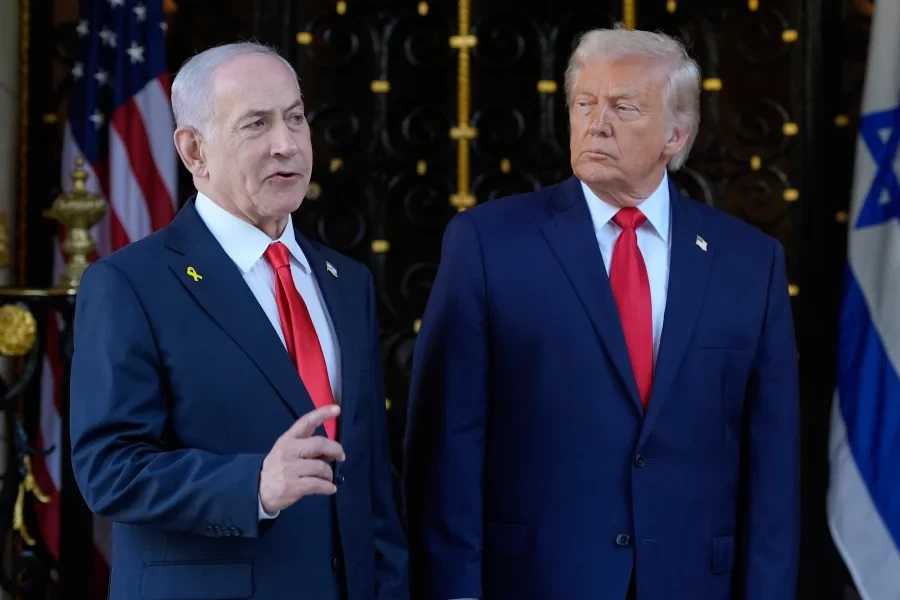
President Donald Trump's latest proposal to advance peace in Gaza is facing growing uncertainty as Israeli Prime Minister Benjamin Netanyahu remains publicly silent on whether his government will support the framework.
Days after the White House unveiled a plan centered on Hamas disarmament and a phased path toward stability, Israel has yet to officially endorse the proposal. Instead, renewed military operations over the weekend have shifted attention away from diplomacy and back to the battlefield.
The contrast between diplomatic optimism and escalating violence has raised new questions about whether the initiative can survive its first critical test.
Airstrikes Overshadow Diplomatic Progress
While international mediators welcomed the proposed agreement as a potential breakthrough, Israeli airstrikes intensified across parts of Gaza over the weekend, resulting in one of the deadliest periods in recent weeks.
The strikes came despite the proposed framework calling for a halt in military operations while negotiations continue.
Although the pace of attacks later slowed, the escalation fueled concerns that momentum toward a broader agreement could quickly unravel.
Netanyahu Keeps His Position Private
Rather than publicly addressing Trump's proposal, Netanyahu has allowed government officials and political allies to speak on Israel's behalf.
Israeli officials have continued to insist that military operations will not end until Hamas is fully disarmed and security objectives are achieved.
The prime minister's cautious approach reflects the political sensitivity surrounding any agreement that could involve concessions ahead of Israel's upcoming national elections.
Political Pressure Mounts Inside Israel
The proposed framework has sparked immediate resistance from members of Netanyahu's governing coalition.
Several senior lawmakers have openly opposed any withdrawal from Gaza before Hamas completely relinquishes its weapons, arguing that doing so would weaken Israel's security position.
Some coalition partners have urged the prime minister to formally reject the proposal and block further implementation of international stabilization efforts inside Gaza.
The growing internal opposition highlights the difficult balancing act Netanyahu faces between maintaining domestic political support and preserving close relations with Washington.
U.S. Officials Push to Keep Talks Alive
American and international mediators continue working to prevent negotiations from collapsing.
Senior envoys traveled to Israel for discussions with Netanyahu, emphasizing that both sides must fulfill their commitments if a lasting agreement is to succeed.
Behind closed doors, officials also reportedly encouraged Israel to scale back military operations in order to preserve the fragile diplomatic process.
The meetings were described as productive, although significant differences remain over how and when security arrangements would be implemented.
Trump Holds Key Leverage
Analysts say the future of the proposal may ultimately depend on President Trump.
The United States remains Israel's closest strategic partner, giving Washington significant influence over the direction of negotiations.
Diplomatic observers believe stronger pressure from the White House could encourage progress, while a softer approach may allow disagreements to persist until after Israel's elections.
At the same time, Trump continues seeking broader regional stability while balancing security concerns and domestic political considerations.
Gaza Remains at the Center of Global Attention
As negotiations continue, conditions inside Gaza remain fragile.
Humanitarian organizations continue to warn about the impact of ongoing military operations on civilians and essential infrastructure, while international leaders have renewed calls for restraint from all parties.
With no formal agreement yet in place, uncertainty continues to dominate both the diplomatic and humanitarian landscape.
Outlook
Trump's latest peace initiative has opened a possible path toward reducing violence, but major political and security obstacles remain.
Netanyahu's silence, continued military operations, and resistance within Israel's governing coalition suggest that difficult negotiations still lie ahead.
Whether diplomacy gains momentum or renewed fighting overshadows the process will likely determine the next chapter of one of the Middle East's longest-running conflicts.



Reader discussion
Comments 0
No comments yet. Be the first to join the conversation.